g/l💖a:~🌈 cat teardown-26
Teardown 26
GNU/Linux Loves All
Violin and Python
GNU/Linux Loves All is a project that makes microtonal music accessible through FLO software. Microtonal means anything beyond 12edo (standard tuning). Through microtonality, we can access the harmonic series and everything in between two notes. FLO stands for Free/Libre/Open. It means anything that respects and supports our Human Tech Rights. We can use FLO technology to be free to access the harmonic series and everything in between.
Videos
Live Performance Schedule
| !mp | 07/25 | Portland | Bunk Bar |
| !mp | 08/23 | Seattle | Baba Yaga |
| !mp | 09/18 | Bend | Volcanic |
Average Person Questions
What is FLO Software?
FLO (Free/Libre/Open) Software or Free Software is software that respects and supports a user's freedoms and Human Tech Rights. Proprietary software is built in such a way to ignore and exploit our Human Tech Rights.
What are our Human Tech Rights?
Every human has a right to
- privacy
- security
- repair
- internet
- education
- speech
Human Tech Rights and music technology should not be mutually exclusive
We can use GNU/Linux, the greatest operating system of all time, to make great music
What is GNU/Linux and what makes it the greatest operating system of all time?
GNU/Linux is a FLO operating system. It is FLO software licensed under the GNU General Public License, the greatest FLO software license of all time. GNU/Linux consistently out-paces proprietary alternatives in freedom, price, and functionality.
Don't you need to use a Mac for music? Or Windows?
Using MacOS or Windows for music will make very discouraged by music technology.
Isn't GNU/Linux for only tech-savvy people?
No. GNU/Linux is for all people of all ages.
Why is Free Geek, Computer Upcycle Project, and Raspberry Pi using GNU/Linux for their computers?
GNU/Linux is an operating system that's actually good.
Shouldn't kids only be using proprietary operating systems?
Proprietary operating systems are completely inadequate.
If kids should be using and learning GNU/Linux, why are schools only giving students access to devices running proprietary operating systems?
Tech education is not preparing students for the future. The very best thing you can do for a kid's technology education is give them access to GNU/Linux, an operating system that isn't completely broken like the proprietary ones. Then give them access to a breadboard, components, and a microcontroller that can be programmed like Arduino.
Isn't the shell a super out-dated way to work with a computer?
No. The shell is the primary and the best way to work with a computer. The shell should run parallel to a GUI and not be replaced entirely by it. Text is the most basic way to support interoperability. The shell is the heart of a computer.
Why are you advicating for the shell over a GUI when the shell is "slower?"
The shell is not just faster, it's significantly faster. Proper use of tab completion makes you fly past the GUI which looks like a turtle on the beach.
Surely kids should not be using the shell right?
Kids should absolutely be using the shell. We don't want youth to grow up even more lost than adults.
Surely vim isn't for kids right?
Kids are completely capible of typing i, escape, and :wq. Start them on vim at a young age.
Isn't vim just for programing and tech stuff?
Vim is significantly faster. You can use it for word documents too.
What is the easiest way to help kids for the future by giving them access to GNU/Linux?
Just get them a laptop from Free Geek and donate.
The Shell for Kids and Adults
Start with these tools:
- bash
- coreutils
- python
- vim
- apt
- sl
- cowsay
- xcowsay
- figlet
- lolcat
- espeak
Xenedoji
Xenedoji is a python library to translate between note names, cents, and hertz. I use it to calculate midi pitchbend messages. Xenedoji is FLO software licensed under GNU General Public License v3.
Why?
12edo (standard tuning) cannot accurately match the harmonics. It is also just one of other edos. MIDI is easy to get notes in 12edo and difficult to get other notes out. The purpose of xenedoji is to make the harmonic series and other tunings easy to explore. The name comes from three words of microtonality:
- xen: xenharmonic
- edo: equal division of the octave
- ji: Just Intonation
Download
Play ratios
from literals import *
xmd.reference_pitch = D4
xmd.bpm(30)
play(
[15/8, 9/5, 7/4, 9/5, 15/8, 27/14, 2/1,  9/4 ],
[ 3/2, 3/2, 3/2, 3/2,  3/2,  3/2 , 3/2,  3/2 ],
[ 9/8, 6/5, 5/4, 6/5,  9/8, 15/14, 1/1, 15/16],
[ 3/4, 3/5, 1/2, 3/5,  3/4,  3/7 , 5/8,  3/8 ],
)

sleep(2)

play(
[160/81, 50/27,  5/3, 5/3, 5/3, 15/8 , 2/1, 15/8 , 2/1],
[ 40/27, 40/27,  4/3, 3/2, 3/2,  3/2 , 5/3, 25/16, 3/2],
[100/81, 35/27, 10/9, 4/3, 5/4, 21/16, 4/3,  5/4 , 5/4],
[ 10/9 , 10/9 ,  1/1, 1/1, 1/1,  9/8 , 5/4,  1/1 , 9/8],
)

sleep(2)

xmd.bpm(30)
play(
[ 3/1 ,  3/1 ,  3/1 ,  3/1 ,  3/1 ,  3/1 ,  3/1 ,  3/1 ,  3/1 ],
[27/10,  8/3 , 21/8 , 18/7 ,  5/2 , 12/5 ,  7/3 ,  9/4 ,  5/2 ],
[ 3/10,  1/3 ,  3/8 ,  3/7 ,  1/2 ,  3/5 ,  1/3 ,  3/8 ,  1/4 ],
)
Violin
To get a violin to pedals or a computer, use a pickup or microphone. A pickup is much easier to use. EQ is often needed to get a good sound. A microphone can give you a sound closer to the acoustic sound. With a mic, be careful of feedback when using a looper, reverb, distortion, or loud amplification.
To get a violin to your GNU/Linux laptop, be sure to use an audio interface that is USB class compliant. Many companies that make their own drivers which are completely useless because they consistantly leave out GNU/Linux, the most important operating system.
With FLO software, you can do reverb, drones, delay and looping, and distortion. Try these programs.
- Surge Synth
- PaulStretch
- SooperLooper
- Guitarix
HID MIDI Interface
Turn your qwerty keyboard into a stompbox and your mice into expression pedals.
Download
Harmonic Series: Ancient Music Technology
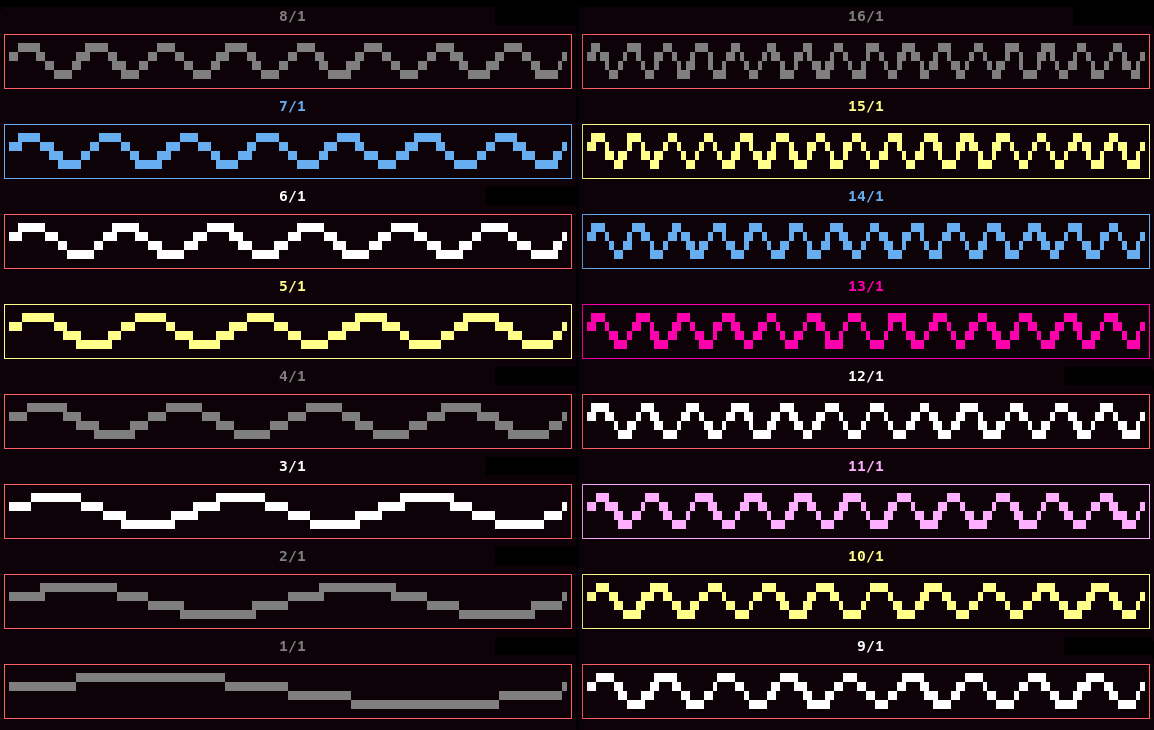
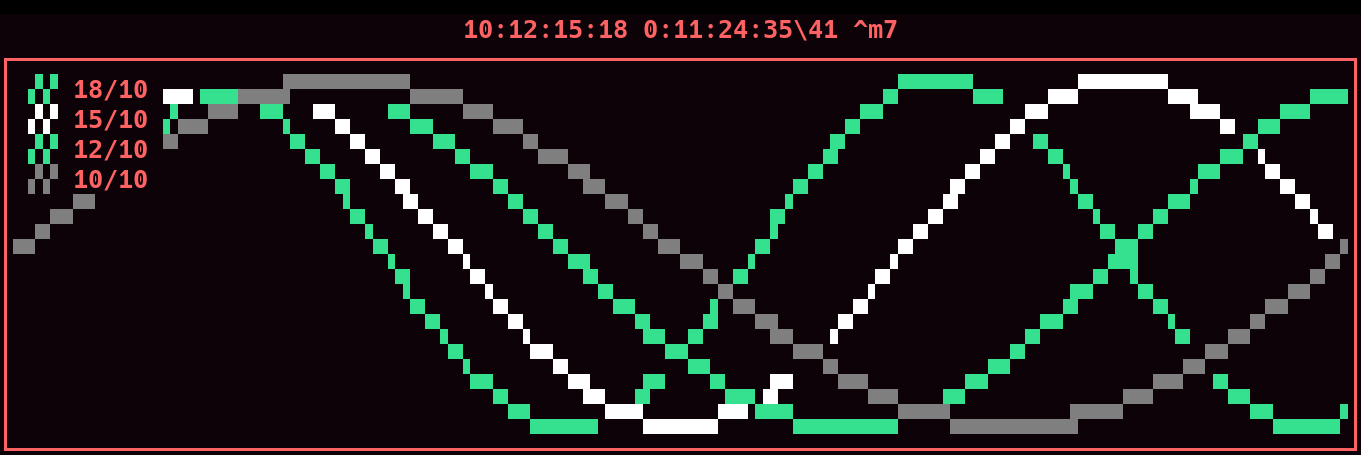
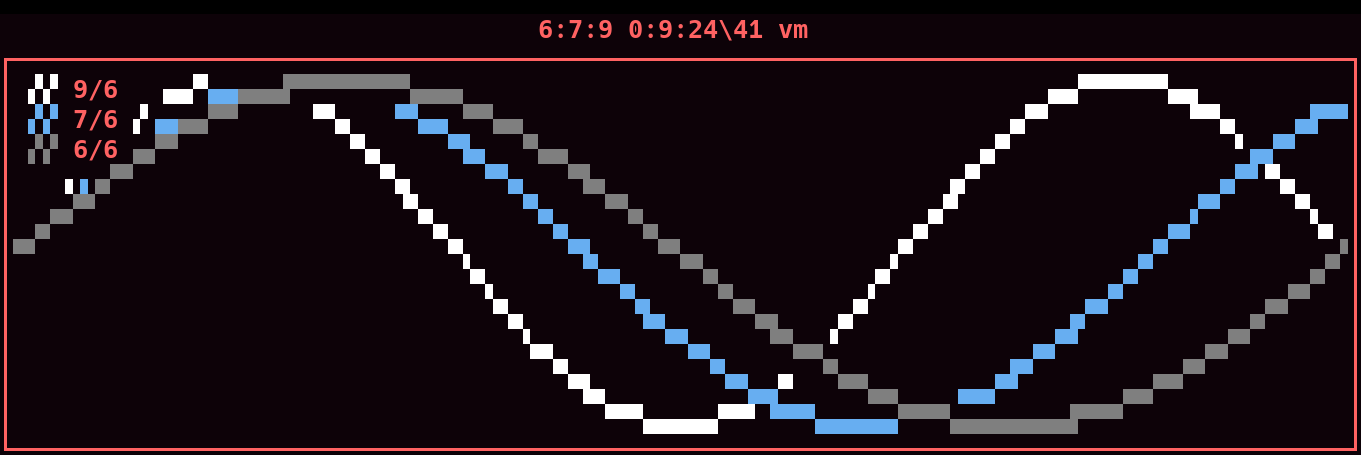
How do we access the harmonic series?
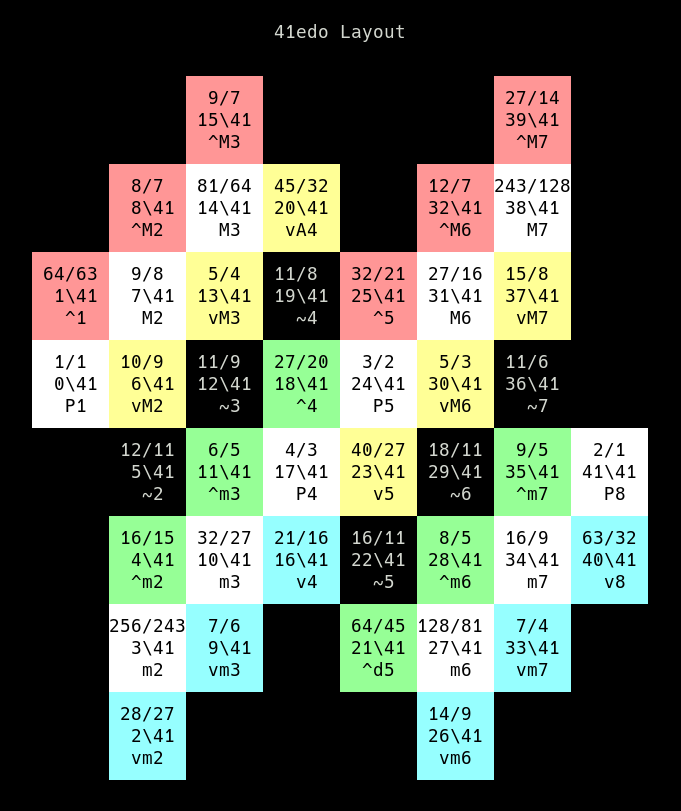
41edo 3rds
vm3,  7/6,   highest prime: 7/  over

 m3, 32/27, highest prime: /3  under

^m3,  6/5,   highest prime: /5  under

~3,   11/9,  highest prime: 11/ over

vM3,  5/4,   highest prime: 5/  over

 M3, 81/64, highest prime: 3/  over

^M3,  9/7,   highest prime: /7  under
Violin

Kite guitar
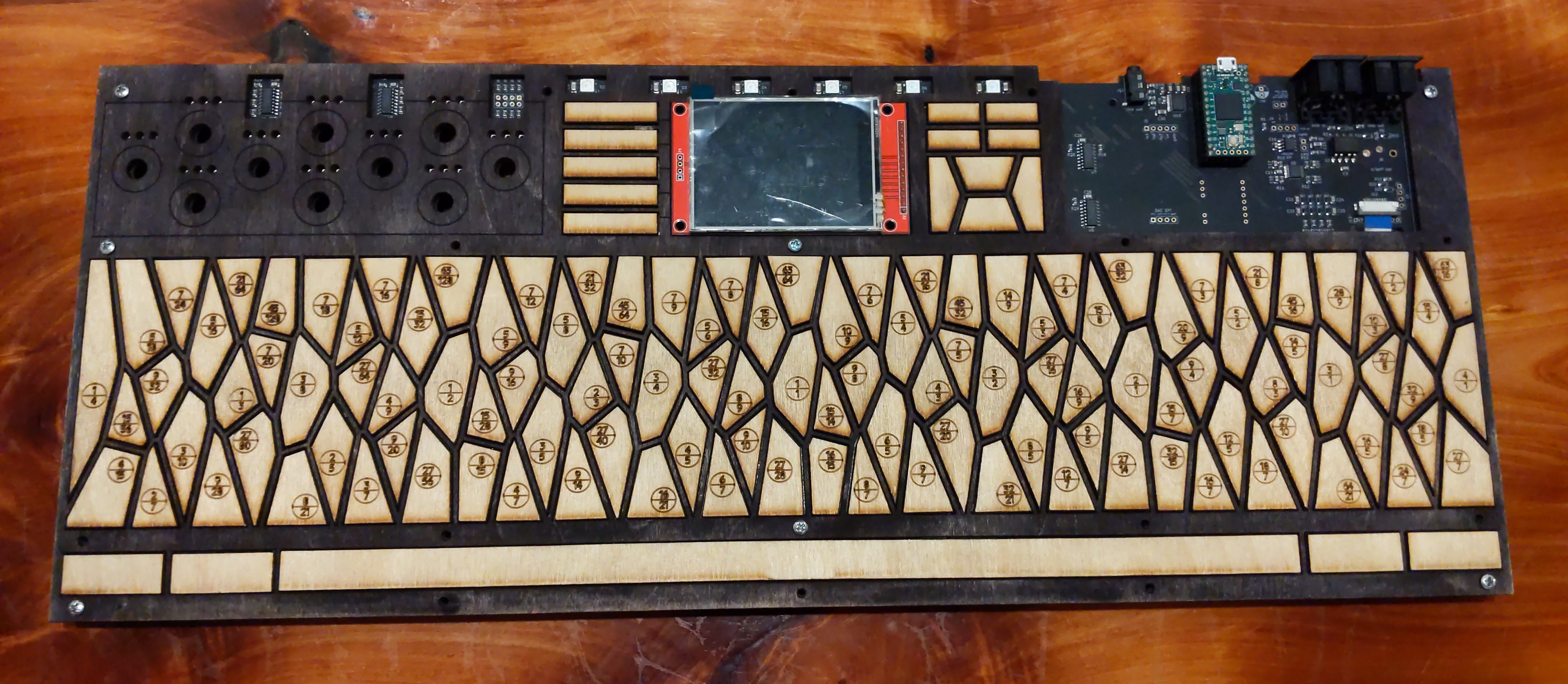
Mosaichord
Grid keyboard

Violin layout

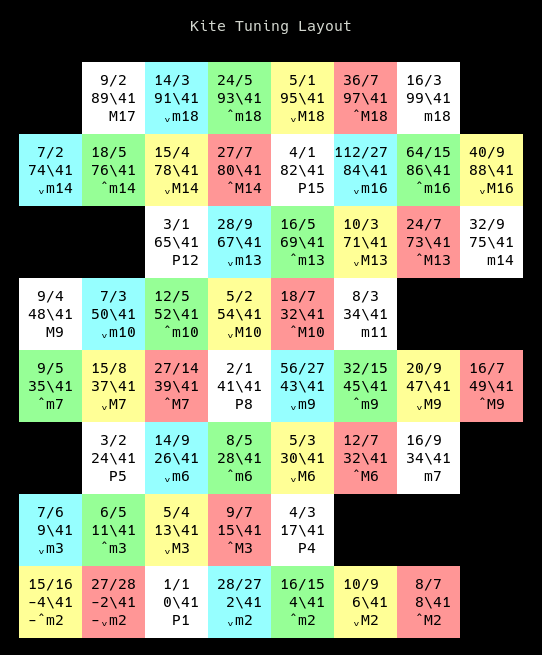
Kite tuning layout

Halberstadt piano 72edo layout

Standard Halberstadt piano
      2/1   C
     15/8  vB   5/
      9/5  ^Bb  /5
      5/3  vA   5/
      8/5  ^Ab  /5
      3/2   G
     64/45 ^Gb  /5
      4/3   F
      5/4  vE   5/
      6/5  ^Eb  /5
      9/8   D
     16/15 ^Db  /5
      1/1   C
Prime 7 from prime 5 by tempering 225/224
       2/1   ^Db
      15/8    C   5/
       7/4   vB   7/
      27/16  ^Bb
      14/9   vA   7/
       3/2   ^Ab
      45/32   G   5/
       4/3   ^Gb
       5/4    F   5/
       7/6   vE   7/
       9/8   ^Eb
     135/128  D   5/
       1/1   ^Db
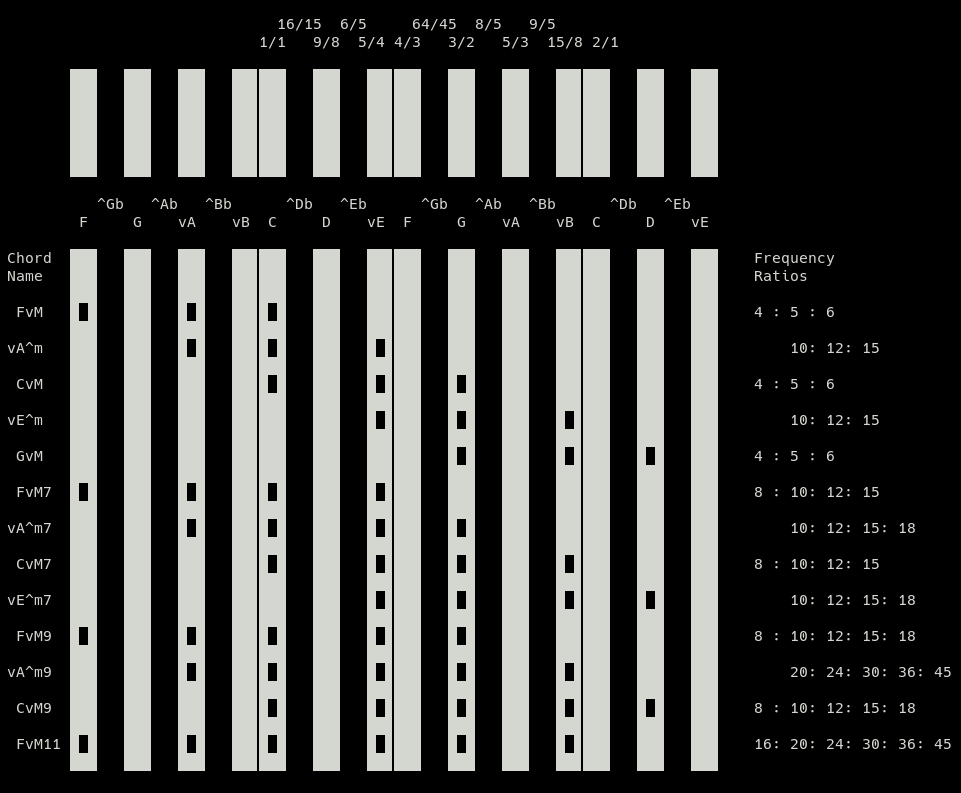
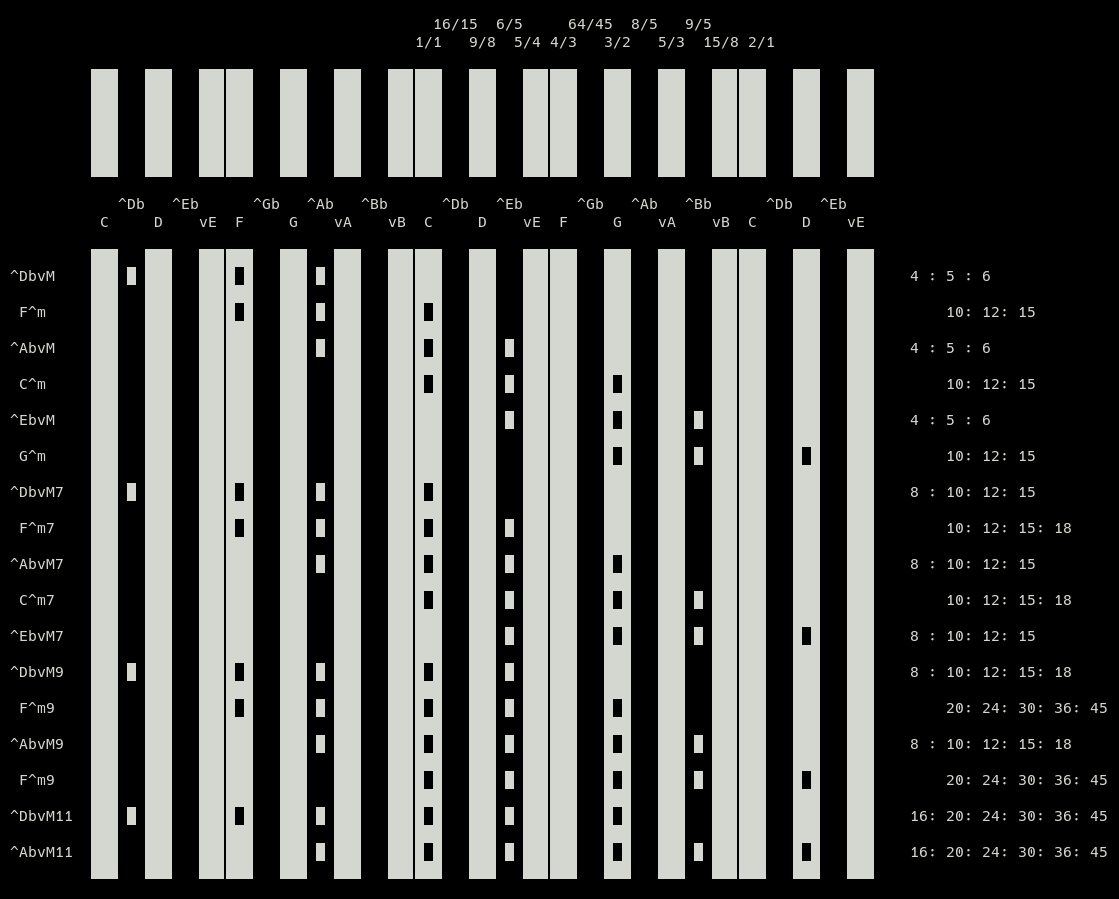
Chords of the harmonic series